
Losing Weight on a GLP-1? Why You Don't Have to Wait to Start Body Sculpting
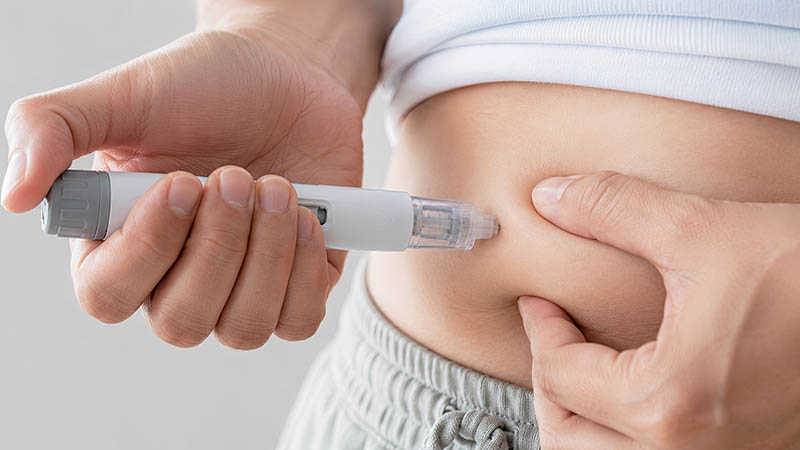
One of the questions I hear from women who are actively losing weight is, "Should I wait until I reach my goal weight before I start body sculpting?"
My answer is: not necessarily.
In fact, if you know you're going to be losing a significant amount of weight—whether you're taking a GLP-1 medication such as Wegovy or Zepbound, or you're losing weight without medication—I don't want you automatically thinking you have to lose another 20 or 30 pounds before you can come see me.
I look at weight loss and body sculpting as two different things that can work alongside each other. Your weight-loss plan is about your weight and your health. Body sculpting isn't a weight-loss treatment. What I'm doing is focused on the outside: contouring specific areas and working on the appearance of your skin while your body is changing.
And there are really two big reasons I like having that conversation during weight loss rather than automatically waiting until the end.
Weight Loss and Body Sculpting Aren't the Same Thing
This is probably the most important distinction to understand.
When you lose weight, you're losing fat throughout your body. You don't get to tell your body, "Take it from my stomach, but leave everything else alone."
Body sculpting is different.
Non-invasive body contouring is designed to address specific areas. Depending on the treatment, that may mean reducing the appearance of a small localized area of fat, changing the contour or circumference of a treated area, improving the appearance of cellulite, or helping skin look or feel tighter.
The U.S. Food & Drug Administration makes an important distinction here: non-invasive body contouring isn't a treatment for obesity, doesn't cause weight loss and doesn't provide the health benefits associated with weight loss.
That's not what I'm trying to do for you.
If you're losing weight under the care of your healthcare provider, that's one part of what you're doing. At BAQ, I'm working with you on a different part: the areas you see and feel on the outside.
Reason #1: Seeing Changes Can Be Really Motivating
Anyone who's tried to lose a meaningful amount of weight knows it doesn't always happen in a nice, straight line.
You can feel like you're doing everything right and still have times when the scale isn't moving as quickly as you'd like. That can get frustrating.
We're human. We want to see and feel progress.
That's one reason I like working with women while they're losing weight. Maybe you're beginning to see more contour through your waist. Maybe you're noticing changes in a particular area, your clothes are fitting differently, or you're simply seeing something different when you look in the mirror.
For some women, seeing those changes can be incredibly motivating.
It doesn't replace what the scale says, and it certainly doesn't replace the health improvements you're working toward. It's simply another way of noticing that your body is changing.
Sometimes that visual reinforcement gives you that feeling of, Okay. I'm seeing progress. Keep going.
Reason #2: Don't Wait Until the End to Start Thinking About Your Skin
This is the bigger reason I encourage women who expect to lose a significant amount of weight to talk to me sooner rather than later.
Significant weight loss can change the appearance of your skin. Some people notice loose or sagging skin as their body becomes smaller, and that isn't exclusively a "GLP-1 thing." Significant or rapid weight loss itself can contribute to those appearance changes, whether the weight was lost with medication or another way. The American Academy of Dermatology discusses skin changes associated with GLP-1 medications and weight loss.
That's why I don't love the idea of automatically waiting until you've lost 30 or 40 pounds before you even start thinking about your skin.
At BAQ, one of the technologies I use is radiofrequency, or RF. RF uses controlled energy to heat tissue beneath the skin. According to the FDA's guidance on non-invasive body contouring technologies, appropriately used RF technology may cause skin to look or feel tighter through effects that can include skin contraction and increased collagen production.
But here's what I want to be very clear about: I can't promise that RF—or any non-invasive body-sculpting treatment—is going to prevent loose skin after significant weight loss.
Results vary, and skin can respond very differently from one person to another.
My point is simpler than that. If your body is going through a significant change and skin appearance is something you're concerned about, I'd rather have that conversation with you while it's happening than have you assume there's no reason to talk to me until you're completely finished losing weight.
What About the Fat You Can Still Pinch?
There's another distinction that's helpful when you're trying to understand where body sculpting fits.
Visceral fat is the deeper abdominal fat that surrounds internal organs.
Subcutaneous fat sits beneath your skin. It's the softer fat you can pinch, and it can contribute to those specific areas women point to when they come see me—the abdomen, waist, thighs, arms and other localized areas they'd like to contour.
When you're losing weight, you're working on overall body weight and fat throughout your body. When we're talking about non-invasive body contouring, we're talking about something much more localized.
They're doing different jobs.
That's why I don't look at body sculpting as competing with weight loss. One isn't a substitute for the other.
"But Bronwyn, What If I Still Have 20 or 30 Pounds to Lose?"
That doesn't mean I'm automatically going to tell you that you should start treatments tomorrow. It means you don't have to decide on your own that you're "not ready yet."
There are a few things I'd rather talk through with you:
- How much weight do you still expect to lose? Your body may continue changing significantly, and that's important for me to understand.
- What areas are bothering you right now? We can talk about what you're seeing, what's changing and what you'd like to address.
- What are you hoping body sculpting will accomplish? That's where we can set realistic expectations about what these treatments can—and can't—do.
Then we can decide whether it makes sense to begin now, wait until later, or take a different approach.
And if you're taking a GLP-1 medication, decisions about that medication—including whether it's appropriate for you, your dosage and your weight-loss goals—belong between you and the healthcare professional prescribing it.
My lane is body sculpting.
I'm not managing your medication or your weight-loss program. I'm working with you on the cosmetic changes you're seeing on the outside.
You Don't Have to "Finish" Before We Talk
If there's one thing I want women to take away from this, it's this:
Don't automatically assume you have to finish losing weight before you're ready to talk about body sculpting.
If you're actively losing weight and starting to notice areas that aren't changing the way you expected, changes in the appearance of your skin, or areas you'd eventually like to contour, we can talk about those things now.
For a lot of women, I'd rather be right there with you while your body is changing than have you come to me afterward and say, "Okay, I lost the weight. Now what am I supposed to do about everything else?"
Your healthcare provider handles your health and medical weight-loss plan. I work with you on the outside.
And those two things don't necessarily have to happen one after the other. They can happen alongside each other.
Body sculpting is a cosmetic treatment, not a weight-loss treatment or a substitute for medical care. Individual results vary. If you're taking a GLP-1 medication or participating in medically supervised weight loss, questions about your medication, rate of weight loss and overall health should be discussed with your healthcare provider.
Sources
Bronwyn is the nicest person you will ever meet! She makes you feel extremely comfortable and at ease. The space is also very calming. I've been very happy with my experiences with her.
Tiffany S.